


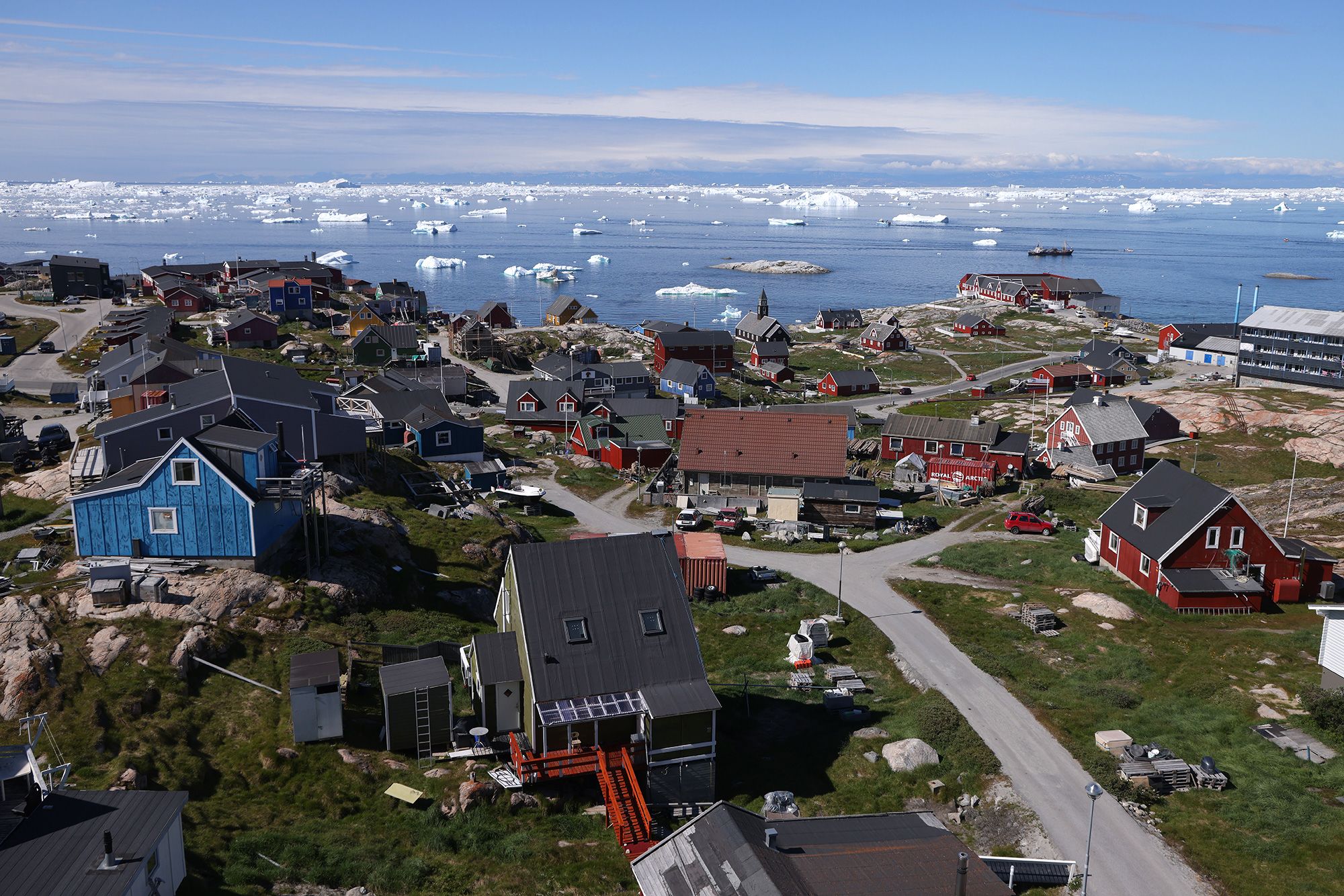
25 Jan Why does the USA want Greenland when Alaska has everything?
If Alaska Has Everything, Why Does Greenland Still Matter? A Comprehensive Analysis of Resources, Geography, and Arctic Power
Introduction: Beyond Abundance – The Strategic Imperative of Greenland
In recent years, Greenland has reentered American political and strategic discussions, prompting a straightforward and intuitive question: why would the United States need Greenland when Alaska already offers vast resources, Arctic access, military infrastructure, and enormous undeveloped potential? This question, while logical, often overlooks the intricate calculus of modern geopolitical power.
Alaska is frequently described as America’s final frontier — a land rich in oil, gas, minerals, fisheries, and strategic positioning. In many respects, Alaska does appear to contain nearly everything Greenland has, and often in far greater quantity. Its sheer scale and natural wealth are undeniable, forming a foundational pillar of U.S. national security and economic strength.
Yet Greenland continues to be discussed by policymakers, defense planners, and strategic analysts not because Alaska is lacking, but because modern power is not determined solely by what a country owns. It is shaped by geography, redundancy, global positioning, and long-term strategic leverage. In an increasingly contested Arctic, the sum of these factors makes Greenland an indispensable piece of the geopolitical puzzle, even with Alaska’s immense contributions.
What Alaska Has, Specifically, and Where: America’s Northern Powerhouse
Alaska is the largest state in the United States, covering more land than California, Texas, and Montana combined. It is also one of the most resource-rich regions on Earth, with a diversity of assets unmatched by almost any single political jurisdiction. From hydrocarbons and minerals to fisheries and military positioning, Alaska already functions as a continental-scale strategic asset, safeguarding U.S. interests across the Pacific and Western Arctic.
Comparative Mineral Resource Analysis: Alaska vs. Greenland
| Mineral Category | Alaska (The Established Powerhouse) | Greenland (The Untapped Frontier) |
| Rare Earth Elements (REE) | High potential at Bokan Mountain (heavy REEs); essential for missile guidance and EVs. | Top 10 world rank for reserves. Home to Kvanefjeld and Tanbreez, two of the world’s largest deposits. |
| Zinc & Lead | Red Dog Mine is one of the world’s largest producers of zinc. | Massive undeveloped resources at Citronen Fjord; 2,500km geological belt in the north. |
| Gold & Silver | Major active mines: Fort Knox, Pogo, Greens Creek. Ranks among top global producers. | Active mining at Nalunaq; significant potential in the southern fjords. |
| Copper | Home to the Pebble Deposit (one of the largest in the world) and Ambler District. | Significant traces in the west and south; largely underexplored but geologically promising. |
| Graphite | Graphite Creek is the largest known flake graphite deposit in the U.S. | Amitsoq project claims some of the highest-grade (purest) graphite in the world. |
| Critical Metals | Rich in Cobalt, Tin, Antimony, and Tungsten; vital for domestic defense supply chains. | Significant deposits of Nickel, Tantalum, Niobium, and Vanadium (crucial for specialty steel). |
| Energy Minerals | Vast Uranium potential; massive coal, oil, and natural gas reserves. | 8th largest Uranium deposit at Kvanefjeld (currently under mining restrictions). |
| Gemstones | Nephrite Jade and Quartz. | World-class Rubies and Pink Sapphires; significant Diamond prospects. |
Oil and Natural Gas Resources in Alaska: Fueling a Nation
The North Slope of Alaska, bordering the Arctic Ocean, is home to Prudhoe Bay, one of the largest oil fields ever discovered in North America. Since production began in the late 1970s, the region has produced billions of barrels of oil and remains a cornerstone of U.S. energy security.
Oil from the North Slope is transported through the Trans-Alaska Pipeline System (TAPS), an approximately 800-mile pipeline that runs south to the ice-free port of Valdez. This pipeline is itself a strategic asset, enabling year-round oil transport regardless of Arctic sea ice conditions.
In addition to oil, the North Slope contains enormous natural gas reserves. Much of this gas remains undeveloped due to the absence of large-scale export infrastructure, but it represents a significant long-term energy reserve, poised to meet future domestic or international demand as infrastructure evolves.
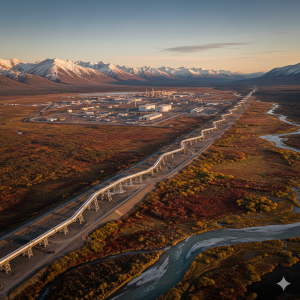
The Arctic National Wildlife Refuge (ANWR) coastal plain, often referred to as the 1002 Area, is estimated to hold billions of barrels of recoverable oil. Its proximity to existing North Slope infrastructure makes it economically attractive, though politically controversial. Further south, Cook Inlet, located in South-Central Alaska near Anchorage, is a mature oil and gas basin that supplies much of the region’s electricity and heating needs, reducing reliance on imported fuel and enhancing regional energy independence.
Alaska’s Mineral and Critical Resource Wealth: The Foundation of Modern Industry
Alaska is increasingly recognized as one of America’s most important regions for critical and strategic minerals essential to defense, advanced manufacturing, and electrification. This mineral endowment positions Alaska as a vital component in securing domestic supply chains, reducing reliance on foreign sources, and bolstering economic resilience.
Bokan Mountain in Southeast Alaska is one of the most promising rare earth element (REE) deposits in the United States, particularly rich in heavy rare earths used in missile guidance systems, electric vehicle motors, advanced electronics, and permanent magnets. These elements are vital for high-tech industries and national defense, making Bokan Mountain a strategic national asset.
Southwest Alaska hosts the Pebble Deposit, one of the largest undeveloped copper deposits in the world. Copper is essential for electrical grids, renewable energy systems, military equipment, and data infrastructure – the very backbone of modern society. Northwest Alaska contains the Ambler Mining District, rich in copper, zinc, cobalt, and lead. The proposed Ambler Road would unlock a vast new mining corridor with strategic importance for domestic mineral supply chains, though it too faces environmental considerations.
Gold resources are widespread, with major operations such as Fort Knox near Fairbanks, the Pogo Mine in Interior Alaska, and the Donlin Gold Project, which has the potential to become one of the largest gold mines globally. Finally, the Red Dog Mine in Northwest Alaska is one of the largest zinc mines in the world and plays a critical role in global industrial supply chains, providing a key material for galvanized steel and various alloys.
Fisheries and Renewable Natural Resources: Sustaining the Nation
Alaska produces more than half of all U.S. wild-caught seafood, making it a cornerstone of national food security and a significant economic driver. This robust industry supports thousands of jobs and provides healthy protein to millions.
Major fisheries include pollock in the Bering Sea, salmon in Bristol Bay and Southeast Alaska, halibut across the Gulf of Alaska, and crab fisheries throughout the Bering Sea. These fisheries are managed under rigorous scientific principles to ensure sustainability, demonstrating Alaska’s commitment to long-term resource stewardship. While Greenland also possesses valuable fisheries, Alaska’s scale, diversity, infrastructure, processing capacity, and regulatory framework are far more advanced, giving it a distinct advantage in global seafood markets.
Alaska’s Strategic Military Importance: Guarding the Arctic and Beyond
Alaska is one of the most strategically important regions in the global U.S. defense posture, serving as a critical hub for Arctic and Pacific operations. Its geographical position provides a forward operating base for projecting power and defending the homeland.
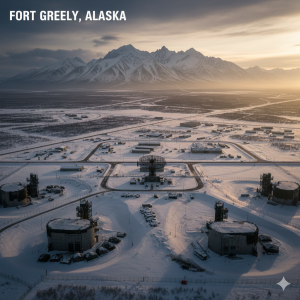
Fort Greely hosts ground-based missile interceptors that form a critical component of America’s national missile defense system. These interceptors are designed to defend against intercontinental ballistic missile threats, making Fort Greely a literal last line of defense.
Joint Base Elmendorf–Richardson (JBER) near Anchorage and Eielson Air Force Base near Fairbanks support advanced air power, including fifth-generation fighter aircraft capable of operating across the Arctic and Pacific theaters. These bases are crucial for air defense, rapid deployment, and training in extreme cold-weather conditions.
Furthermore, Alaska lies roughly 55 miles from Russia at the Bering Strait, making it a frontline region for Arctic surveillance, early warning, and rapid response. This proximity underscores Alaska’s pivotal role in monitoring and responding to activities in the Western Arctic, an increasingly strategic and militarized zone.
Development of Alaska During the Trump Administration: A Focus on Strategic Capital
During the Trump administration, Alaska was viewed less as a preserved frontier and more as an underutilized strategic capital, ripe for development to bolster national interests. The underlying philosophy was to harness Alaska’s vast potential to strengthen national security, diversify supply chains, and enhance economic sovereignty.
Policy priorities included expanding oil and gas leasing on the North Slope, most notably opening the Arctic National Wildlife Refuge (ANWR) to exploration, a move aimed at boosting domestic energy production. Efforts were also made to streamline mining and infrastructure permitting, accelerating projects deemed vital for domestic mineral independence.
Support was given to infrastructure projects such as the Ambler Road, intended to unlock new mining districts, and expanded Arctic port development to enhance logistical capabilities in the region. This broader approach treated Alaska as a critical strategic asset meant to strengthen national security, supply chains, and economic sovereignty, reflecting a shift towards leveraging its resources more aggressively.
If Alaska Has All This, Why Greenland Still Matters: The Geopolitical Imperative
Greenland’s value does not stem from a lack of resources in Alaska. Instead, it lies in geography, redundancy, and global positioning in an increasingly contested Arctic. Its strategic significance is derived from its unique placement, offering advantages that even the vastness of Alaska cannot fully replicate.
Geography as Strategic Power: The Arctic’s Crossroads
Greenland sits between North America, Europe, the Arctic Ocean, and the North Atlantic. This extraordinary positioning allows influence over transatlantic air routes, emerging Arctic maritime corridors, and crucial North Atlantic naval traffic. While Alaska anchors the Pacific and western Arctic, it cannot exert the same level of influence over Atlantic routes, making Greenland an essential complement for comprehensive Arctic control.
The Greenland–Iceland–United Kingdom (GIUK) Gap: A Crucial Chokepoint
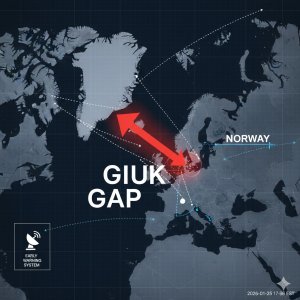
The Greenland–Iceland–United Kingdom (GIUK) Gap is one of the most strategically important maritime chokepoints in the world. It serves as the primary passage between the Arctic Ocean and the Atlantic and has historically been a critical transit route for Russian submarines seeking access to the broader Atlantic.
Greenland forms the northern boundary of this gap, making it critical for submarine tracking, protection of vital undersea communication cables that crisscross the Atlantic, and ensuring transatlantic shipping security. Its position allows for comprehensive surveillance and interdiction capabilities, vital for NATO’s defense posture.
Missile Defense, Space, and Early Warning: Extending America’s Reach
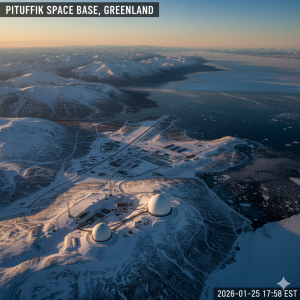
Greenland’s Pituffik Space Base (formerly Thule Air Base) plays a vital role in missile warning, satellite tracking, and space surveillance. This base is a cornerstone of the U.S. ballistic missile early warning system (BMEWS), providing critical detection capabilities against intercontinental ballistic missile (ICBM) threats.
Missile trajectories from Eurasia toward North America frequently pass over the Arctic, making Greenland a key early-warning location. While Alaska provides interception capability (via Fort Greely), Greenland provides detection depth and extended warning time, allowing for crucial minutes of reaction time that could mean the difference between defense and devastation. This layered defense is essential for national security.
Resource Diversification and Supply Chain Security: Beyond Domestic
Greenland’s mineral potential matters not because Alaska lacks resources, but because global demand is increasing exponentially, and supply-chain redundancy is strategically necessary. Relying solely on one region, even one as rich as Alaska, creates vulnerabilities. Diversification ensures resilience against geopolitical shocks, natural disasters, or unexpected supply disruptions.
Greenland contains significant deposits of rare earth elements, lithium, graphite, zinc, iron ore, and uranium. These resources are often closer to European markets and could function as a complementary Arctic supply hub, offering alternative sources for critical minerals to both the U.S. and its NATO allies. This reduces overall dependency on potentially unstable or rival nations for essential materials.
Arctic Shipping and Future Trade Routes: A New Maritime Frontier
As Arctic ice retreats due to climate change, new shipping routes are emerging across the polar region, most notably the Northwest Passage and the Northern Sea Route. These routes promise to drastically cut transit times between Asia, Europe, and North America, fundamentally altering global trade patterns.
Greenland sits adjacent to these evolving corridors and could serve as a vital port hub, refueling station, logistics node, and search-and-rescue base for future Arctic shipping. While Alaska plays a similar role in the Pacific Arctic (e.g., Nome), it cannot influence Atlantic-bound Arctic trade routes, which Greenland’s position uniquely enables. Control or influence over Greenland would therefore grant the U.S. significant leverage over future global maritime commerce and security.
Development Plans for Greenland Under U.S. Control or Deeper Integration
If Greenland were to come under U.S. control or deeper integration, development would likely focus on several key areas aimed at modernizing its economy and integrating it into broader North American and NATO supply chains. This wouldn’t be about exploitation, but about strategic partnership and shared security.
Key investments would target:
-
Port Construction and Expansion: Enhancing existing ports and building new deep-water facilities to accommodate larger vessels and serve as logistical hubs for Arctic shipping and resource export.
-
Airport Infrastructure: Modernizing and expanding airports to improve connectivity, support military operations, and facilitate tourism and economic development.
-
Mineral Extraction: Investing in responsible and sustainable mining operations for critical minerals, bringing advanced technologies and best practices to the region.
-
Energy Infrastructure: Developing renewable energy sources (hydroelectric, wind) to power Greenland’s communities and industries, reducing reliance on fossil fuels.
-
Military Modernization: Upgrading existing bases and potentially establishing new facilities to enhance surveillance, early warning, and rapid response capabilities across the North Atlantic and Arctic.
The broader philosophy would be to foster economic growth and self-sufficiency for Greenlanders while aligning its strategic potential with U.S. and allied interests in the Arctic.
Conclusion: Depth and Reach – The Complete Arctic Perimeter
Alaska already provides the United States with immense energy security, critical mineral wealth, formidable military power, unparalleled Arctic access, and robust food security. It is, without question, America’s strategic bedrock in the North.
However, Greenland matters because geography amplifies power, redundancy strengthens security, and Arctic dominance is becoming a defining feature of global competition. In an era where rival powers are increasing their presence and influence in the High North, the ability to control and monitor key strategic locations is paramount.
Alaska provides depth. Its vast resources and expansive military infrastructure offer a robust and resilient foundation for U.S. operations and domestic needs.
Greenland provides reach. Its unique geographic position extends American and NATO influence across the vital North Atlantic and Eastern Arctic, offering critical early warning, maritime control, and logistical advantages that Alaska alone cannot.
Together, they form a complete and formidable Arctic perimeter, ensuring the United States and its allies can secure their interests, project power, and maintain stability in a rapidly changing polar region. It is not an either/or proposition, but a recognition that both are essential for comprehensive Arctic strategy.



No Comments